Tampilkan postingan dengan label Dr. Colin Campbell. Tampilkan semua postingan

Minggu, 09 Februari 2014

Denise Minger: Death By Food Pyramid or Saved By Food Pyramid?


A few years back, Denise Minger instantly rose to fame in the Low-Carb and Paleo diet circles shortly after publishing a blog post criticizing the chapter describing the findings from the China-Cornell-Oxford Project in the book, The China Study, written by Dr. T. Colin Campbell.1 This blog post was very welcomed by proponents of these diets as it provided them with a reference which they used to attempt to use refute much criticism they had been receiving for promoting a diet rich in animal foods.

One reason Minger’s critique likely received much attention, was that unlike other individuals who have attempted to criticize the China Study, rather than making her intention of defending a diet rich in animal foods obvious, Minger attempted to give readers a false impression that if anything she was bias towards a plant-based diet. Minger’s intentions became somewhat apparent when Paleo diet proponent Richard Nikoley posted an e-mail that he received from Minger on his blog.2 The contents of this e-mail made it obvious that Minger had been sending e-mails to proponents of Low-Carb and Paleo diets, suggesting that they cite her blog post as "ammo" to shoot down "vegans" who cite The China Study. The language used by Minger in the e-mail, such as the statement “Of course, they aren't”, in reference to whether animal foods are linked to chronic diseases, suggested the likelihood of confirmation bias in favor of downplaying the harms of animal foods. This raises the question as to whether it was her intention to simply downplay Dr. Campbell’s work, rather than producing an honest review.

As described previously by Plant Positive, and myself, there were a number of serious concerns with Minger’s interpretations of the data from the China Study which further casted doubt on her true intentions. One particular example was Minger's attempt to attribute the association between fat intake, a marker of animal food intake, and an increased risk of breast cancer mortality in the China Study to the consumption of "hormone-injected livestock".3 The fact that the mortality data that Minger examined was from the early to mid-1970s, a time when the use of hormone injections was not exactly widely practiced throughout rural China casts serious doubt on this claim. Furthermore, it is important to consider that the time lag between exposure to a causal agent and when breast cancer becomes life threatening is more than often several decades. For example, the greatest risk of excess death from radiation-related solid cancers, such as breast cancer among the atomic bomb survivors of Hiroshima and Nagasaki was more than half a century after exposure.4 It is therefore likely that most of the dietary related deaths from breast cancer that occurred in the early 1970s would more likely to have been caused by the diets consumed several decades earlier, likely even before hormone injections was used to any meaningful extent in China. This provides further suggestive evidence that Minger was merely trying to downplay the evidence of the harms of animal foods, rather than producing an honest review.

Given Denise Minger’s misleading blog posts, naturally I was more concerned than interested to see what sort of take home message Minger would be attempting to provide readers of her recently published book, Death By Food Pyramid. I have therefore decided to review a number of the key sections of the book to help readers to decide whether to purchase and incorporate the dietary advice in this book.


The IMPACT of the Food Pyramid


The original USDA Food Pyramid from 1992
The title Death By Food Pyramid that Denise Minger and/or publisher chose for this book provides readers with the false impression that Americans (and people in other nations which share similar dietary guidelines) are complying with the federal guidelines, and, as a result more are dying prematurely of dietary related diseases. Evidence strongly casts doubt on such suggestions. For example, despite the tendency for people to over-report the intake of healthy food in food surveys, such surveys have nevertheless found that nearly the entire population of the United States does not adhere to the federal dietary recommendations.5

Although it may be fair to suggest that the federal dietary guidelines can be considered as a lost opportunity to save additional lives, evidence does not suggest that the Food Pyramid promoted a diet that would have increased the risk of dietary related deaths compared to the cholesterol-rich diet consumed by Americans in earlier decades. For example, numerous studies have found that in a number of nations, including the United States, large reductions in serum cholesterol, largely as the result of displacing the proportion of saturated fat in the diet with other sources of energy can explain a significant portion of the decline in coronary heart disease mortality. These large declines generally occurred in order of the nations that were earlier to embrace the lipid hypothesis and reduce the intake of animal fat. For example, this decline began in the late 1960s in the United States, Finland, Australia and New Zealand, but not until a decade later in the United Kingdom which had been distracted by John Yudkin's sugar hypothesis and much slower to embrace the lipid hypothesis.6 In the former communist nations of Eastern Europe, this decline did not occur until the 1990s, following the abolishment of communist subsidies on meat and animal fats after the collapse of the Soviet Union.6 

Although Minger notes this observed decline in mortality in the United States in her book, she suggests that it can more likely be explained by the reduction in smoking prevalence, rather than the displacement of saturated fat with other sources of energy, such as omega-6 polyunsaturated fats and carbohydrate. Minger however failed to provide any data demonstrating what portion of the decline in mortality could be attributed to changes in smoking prevalence and diet/serum lipids. The IMPACT CHD mortality model incorporates among the highest quality data available for risk factors and treatments to help determine how individual risk factors and treatments have contributed to changes in coronary heart disease mortality of a given population. The fact that the prediction of change in coronary heart disease mortality calculated by the IMPACT model has been demonstrated to be largely comparable with the actual change in mortality in nations throughout North America, Northern, Southern, Eastern and Western Europe, South-East Asia, Africa, Australasia and the Middle East provides confidence in the validity of this model.7 8 9 10 11 12 13 14 15 16 17 18 19 20 21

It should be noted that the use of the IMPACT model has made it clear that in those nations which experienced the most dramatic declines in heart disease mortality in the world, such as Finland and the former communist nations of Eastern Europe, large dietary induced declines in serum cholesterol has typically explained a very significant portion of the decline.8 9 10 22 23 The same can be said for the increases in serum cholesterol as the result of an increase in intake of cholesterol and saturated fat, and the surge in heart disease mortality among a number of populations, such as Beijing.17 19 These findings are also supported by earlier studies.6 For example, in 1989 Epstein examined the changes in coronary heart disease mortality in 27 countries during the previous 10 to 25 years, noting that:24
In almost all of the countries with major falls or rises in CHD mortality, there are, respectively, corresponding decreases or increases in animal fat consumption...
Epstein also noted that during this period the prevalence of smoking among women remained largely unchanged or increased in most nations, and that therefore changes in smoking prevalence was unable to explain the large differences in the rate of decline between countries and sexes.24
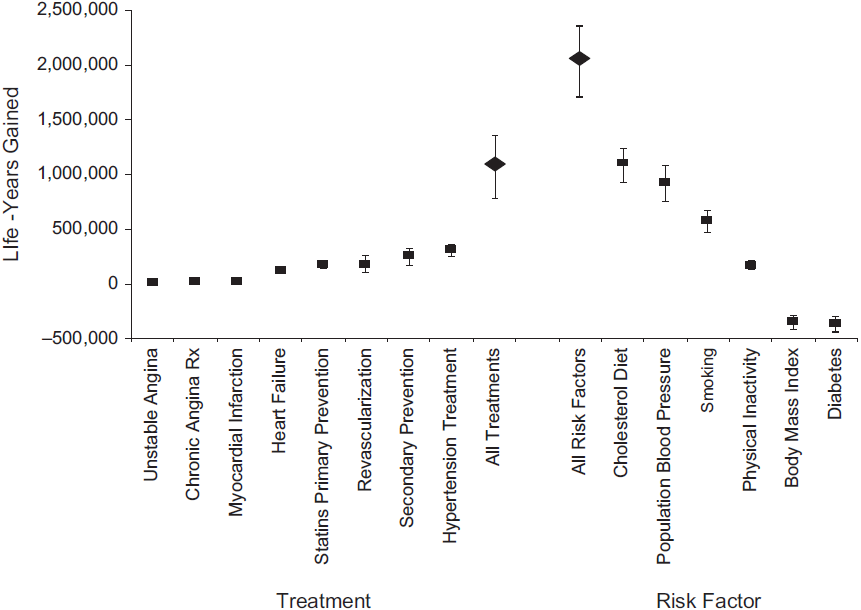
Figure 1. In the United States between 1980 and 2000, changes to serum cholesterol resulting from dietary changes had a greater impact on the decline in coronary heart disease mortality than any other factor, resulting in approximately 1.1 million years of life gained. 

The IMPACT model found that in the United States between the years of 1980 and 2000, a time at which coronary heart disease mortality was reduced by about half, the decline in serum cholesterol, largely due to changes in diet, could explain approximately 24% of this reduction, compared to only about 12% for the decline in smoking prevalence (Fig. 1).7 22 Considering that coronary heart disease has been the leading cause of death in the United States, as well as many other nations for the best part of a century, if anything, a more appropriate title for Minger's book would be "Saved By Food Pyramid".25


Worst Case Scenario for the McGovern Report: Denise Minger


In the chapter Amber Waves of Shame, Denise Minger attempts to explain about the implementation of the Dietary Goals for the United States of 1977, also known as McGovern Report. This report has been considered by many as laying a cornerstone for the forthcoming USDA guidelines. In this chapter, Minger also describes how the egg, meat, milk, salt and sugar industries attempted to hijack the report due to the nature of the recommendations to limit these foods, referencing a video on this topic by Dr. Michael Greger which can be viewed below. It comes as no surprise that Minger cited this video but chose to neglect many of the hundreds of studies cited throughout Dr. Greger's series of videos that cast significant doubt on her own dietary recommendations.


Dr. Michael Greger on the McGovern Report

In an attempt to criticize the science supporting the McGovern Report, Minger focuses on a publication from the American Society for Clinical Nutrition (ASCN) expert committee, published in the American Journal of Clinical Nutrition in 1979, which critically examined the evidence for each of the foods and nutrients that the McGovern Report recommended limiting. Minger states that there was significant disagreement among the ASCN panel regarding the causal association between dietary cholesterol, saturated fat and heart disease. Nevertheless, the panel gave the strength of evidence of a causal association for dietary cholesterol and saturated fat combined a score of 73 out of 100, which was considered “rather high”. Because the score of each of the panelists contributed equally to the overall score, this rather high score suggests that very few of the panelists were in significant disagreement with the diet-heart hypothesis. For dietary cholesterol and saturated fat considered separately, the scores were a little lower, which was suggested to be due to the nature of these two nutrients being highly correlated, making it difficult to determine which contributes more to atherosclerotic heart disease.26 In comparison, virtually all of the panelists considered the evidence linking carbohydrate (ie. sugar) to heart disease as being “extremely weak”, scoring it only 11 out of 100.26 This fact is however largely neglected by Minger despite discussing the potential adverse effects of sugar on heart health in this book.

Minger quotes several selected sentences from the paper on dietary fat and heart disease by ASCN panelist Charles J. Glueck regarding the failure of several diet-heart trials to produce unequivocal supportive evidence, suggesting as if Glueck concluded that there was scant evidence supporting the diet-heart hypothesis. This however was not the case. Glueck actually indicated that while it can be considered that there may not have been unequivocal evidence supporting the diet-heart hypothesis, there was some strong suggestive evidence. In fact, in the paper Minger cites, Glueck described why the failure of the diet-heart trials to produce statistical significant findings does not necessarily negate the hypothesis:27
These failures could have been due to the short duration of the studies, the age of subjects at inception of the studies, or to the inadequacy of the changes in plasma lipids so produced.
In a different paper published in the same issue of the American Journal of Clinical Nutrition, Glueck cited several lines of strong suggestive evidence supporting the diet-heart hypothesis. Notably, Glueck stated:28
Animal studies, particularly in subhuman primates, reveal an unequivocal causal relation between dietary cholesterol or saturated fat, plasma cholesterol levels and development or regression of atherosclerosis
Considering that there is “unequivocal causal” evidence from experiments on nonhuman primates, naturally this would be of considerable concern for humans. If a similar harmful effect would to be shown for a food additive, especially at intakes even lower than that typically consumed in developed nations, there is little doubt that it would be banned almost immediately. Furthermore, in this same paper, without expressing significant disagreement, Glueck quoted the conclusions of a review of the epidemiological evidence by Jerimiah Stamler, one of the expert advisors for the McGovern Report:28
…there is every reason to conclude-based on all seven criterias set forth-that the epidemiologic associations among dietary lipids serum cholesterol and CHD incidence represent etiologically significant relationships. In the multifactorial causation of this disease at least four major factors are operative; diet high in cholesterol and saturated fat, hypercholesterolemia, hypertension and cigarette smoking. However, since the data from both animal and human studies indicate that high blood pressure and cigarette smoking are minimally significant in the absence of the nutritional metabolic prerequisites for atherogenesis, it is further reasonable and sound to designate ‘rich diet’ as a primary, essential, and necessary cause of the current epidemic of premature atherosclerotic disease ranging in the Western industrialized countries.
As has been the case for smoking, there has never been, and never will likely be a definitive trial which tests the diet-heart hypothesis. Indeed, the few smoking cessation trials that have been carried out have failed to produce statistically significant findings for lung cancer mortality. Some of these trails even produced paradoxical findings, including non-significant increased rates of mortality from lung cancer and other cancers in the cessation group.29 30 Similar to the diet-heart trials, there are however plausible explanations as to why these trials failed to demonstrate significant findings for the benefits of smoking cessation. Such explanations include an insufficient duration of study period, and only modest differences in risk factors, points that Glueck noted as limitations of the trails testing the diet-heart hypothesis.29 30 This illustrates why it is critical to consider the totality of evidence, as negative findings from certain lines of evidence, even when normally considered to be at the top of the hierarchy of evidence does not necessarily negate a hypothesis. In other words, the lack of unequivocal evidence should not necessarily prevent federal agencies from recommending lifestyle changes to the public. This point was made clear by Senator George McGovern when he responded to criticism of the report, asserting that:31
I would only argue that Senators don´t have the luxury that a research scientist does of waiting until every last shred of evidence is in.
Minger also attempts to downplay the McGovern Report by taking the statements made by members of the McGovern Committee out of context. For example, Minger focuses on the statements of McGovern Committee member Chris Hitt who believed that even in the worst case scenario, that at the very least "the goals were safe, that there were no risks". Minger then takes this statement out of context to suggest as if the committees opinion of the likely effectiveness of the guidelines had more or less became “at least this probably won’t kill everybody[p.43]. This statement, which suggests that the guidelines are not only ineffective, but are potentially dangerous, is clearly not what Chris Hitt stated, and is a far stretch from the opinion of committee as a whole.

Although Minger would try to have readers believe that a significant portion of the experts at the time were not in favor of the diet-heart hypothesis, evidence strongly suggests otherwise. As pointed out by Plant Positive in his new series of videos, in December 1976, just before the publication of first edition of the dietary goals, Dr. Kaare R. Norum conducted a survey to confirm how supportive the experts in the field were of the validity of the diet-heart and lipid hypotheses. Out of 211 epidemiologists, nutritionists and geneticists who received the survey, 193 recipients from 23 different countries responded.32 The list of surveyed recipients was considered to have included virtually every prominent researcher in the field from the time.33 As a result of this survey, Norum asserted that:
Almost all agreed that there is a connection between diet and the development of CHD, between diet and plasma lipoprotein levels, and between plasma cholesterol and the development of CHD.
It is clear that Minger is trying to give the reader the false impression that the McGovern Committee, the ASCN expert committee, and a large portion of experts in this field felt that the guidelines of the McGovern Report, particularly the guidelines regarding the restriction of cholesterol and saturated fat were not evidence based by taking selected statements made by a number of these experts out of context. These tactics were perhaps used in order to give the reader the false impression that, even from the beginning, the federal guidelines have never been evidence based, providing momentum for the rest of her book. As can be seen from the table below based on Norum's survey, the impression that Minger attempts to provide the reader of the expert opinion of the time should be considered as misleading.


Failing to Meet Her Own Demands


In Death By Food Pyramid, Denise Minger criticizes the federal dietary guidelines, such as those to restrict dietary cholesterol and saturated fat, not so much due to a lack of high quality suggestive evidence, but due to the lack of unequivocal evidence. At the same time, Minger fails to provide any unequivocal evidence to support her own dietary recommendations, recommendations that she seems to suggest should be adopted into the federal guidelines. Minger also suggests that observational studies help little to determine causation when reviewing studies that cast doubt on her recommendations, yet often cites observational studies as the primary line of evidence to support her own recommendations. The fact that Minger is so demanding of the quality of evidence for those federal dietary guidelines that she disagrees with, while having far looser criteria for evidence supporting her favored hypotheses suggests the likelihood of denialism.

Although there is definitely room for significant improvements in the federal guidelines, Denise Minger’s suggestions for improvements are a step in the wrong direction. It is for this reason that it is not possible to recommend this book to anyone interested in health. In conclusion, it appears that Minger is more interested in promoting shoddy science than those who designed the food pyramid.


More on Death By Food Pyramid

Do Vegetarians Live Longer Than Health Conscious Omnivores?


Please post any comments in the Discussion Thread.

Sabtu, 22 September 2012

Debate with Dr. Colin Campbell in The Wall Street Journal

Dr. T. Colin Campbell
A recent article in The Wall Street Journal, titled Would We Be Healthier With a Vegan Diet?, featured Dr. Colin Campbell explaining the health benefits of a plant-based diet and the supporting science, with an opposing view given by Dr. Nanacy Rodriguez, a researcher who's profile shows an extensive list of grants from the livestock industry.1

Dr. Rodriguez’s opposing view raises considerable concerns as her statements are compromised by a number of serious methodological issues and relies largely on inaccurate stereotypes, stereotypes scripted and promoted by lobbying efforts of the livestock industry that promote fear of removing animal products from the diet.


Laboratory Experiments and the Promotion of Cancer


Dr. Nancy Rodriguez
Dr. Rodriguez questioned whether the cancer promoting effects of casein observed in Dr. Campbell’s laboratory can be extrapolated to other animal proteins, but provided scant evidence to the contrary. This resembles the misleading claims of the cholesterol sketpics, including Denise Minger that have been discussed in detail here.

It is well documented that dietary restriction of methionine significantly increases both the mean and maximum lifespan in the rodent model.2 3 Dietary restriction of methionine has also been shown to inhibit and even reverse human tumor growth in animal models and in culture demonstrating that tumors are methionine dependent, yet is relatively well tolerated by normal tissue.4

Compared to whole plant foods, both methionine content and bioavailability is significantly higher in most protein rich animal based foods, with little overlap.3 In addition plant foods contain thousands of phytonutrients which work together to protect against cancer. For example, studies have found that casein is still far more cancer promoting compared to soy protein even when both the diets were formulated to contain equivalent amounts methionine (Fig. 1). This was attributed largely to the difference in content of a number of protective phytonutrients.5

Figure 1. Total number (A) and total weight (B) of mammory tumors in rats, 25 weeks after N-nitrosomethylurea injection. Diet Groups: Casein, 20% casein; SPI, 19% soy protein isolate; SPI +Met., 19% soy protein isolate formulated to contain the equivalent amount of methionine as the casein group.

Due to the high content and bioavailability of methionine and lack of phytonutrients in other animal proteins, the observed cancer promoting effects of casein will therefore largely apply to other animal proteins. Furthermore, Dr. Rodriguez’s statement 'Casein is one of many proteins found in milk' made in an apparent attempt to disassociate milk protein from casein can be considered misleading when taking into account that casein makes up approximately 80% of the protein in bovine milk.6


Findings from Clinical Trials


The consensus that a number of dangerous substances including cigarette smoke promote cancer is purely based off epidemiologic, metabolic and laboratory studies. Therefore there is little justification for Dr. Rodriguez to claim as she did that a number of risk factors that have not been tested in clinical trials such as smoking play a significant role in the cause of cancer, but at the same time neglect evidence regarding replacing meat and dairy with whole plant foods and a decreased risk of cancer purely because of a lack of clinical trials.

A number of randomized controlled trials have actually demonstrated the damaging effects of animal protein in human cancers. For example, a randomized, placebo-controlled trial found that among men at high risk, those supplementing with milk protein were more than six times likely to develop prostate cancer compared to men supplementing with soy protein.7

A number of tightly controlled feeding trials with human participants have established that heme iron from the protein portion of meat increases the production of NOCs (N-nitroso compounds) in the digestive tract to concentrations similar to that found in cigarette smoke, of which most are cancerous.8 Furthermore, a controlled feeding trial found that NOCs arising from heme iron in meat forms DNA adducts in the human digestive tract, and DNA adducts are a well-established marker of cancer.9 These findings are consistent with recent meta-analyses of prospective studies that found that intake of both fresh red meat and heme from meat is associated with a significant increased risk of colorectal cancer.8 10

Based partly on these lines of evidence, in 2011 the expert panel from the World Cancer Research Fund reviewed over 1,000 publications on colorectal cancer and concluded that there is convincing evidence that both fresh and processed red meats are a cause of colorectal cancer.11 Furthermore, a more recent prospective study with over 2.24 million men and women found that compared to participants who consumed less than 1 serving per week, consuming 2 or more servings of meat significantly increased the risk of colorectal cancer.12

There is much controversy regarding the 'Dozens of randomized, controlled, clinical trials' that Dr. Roriguez’s appears to be referring to claiming that 'demonstrated that calcium and dairy products contribute to stronger bones'. For example the Harvard School of Public Health have asserted that:13
...the maximum-calcium-retention studies are short term and therefore have important limitations. To detect how the body adapts to different calcium intakes over a long period of time—and to get the big picture of overall bone strength—requires studies of longer duration.
Walter Willett, the Chair of the Department of Nutrition, Harvard is well known for criticizing the industries unfounded claims about the health properties of dairy. In regards to the 2010 USDA Dietary Guidelines he stated that:14
The guidelines continue to recommend three daily servings of dairy products, despite a lack of evidence that dairy intake protects against bone fractures and probable or possible links to prostate and ovarian cancers.
Willett nevertheless praised parts of the guidelines, stating that:
The guidelines appropriately emphasize eating more vegetables, beans, fruits, whole grains, and nuts and highlight healthful plant-based eating patterns, including vegetarian and vegan diets.
Dr. Rodriguez suggested that 'The Dietary Guidelines are founded on evidence-based, peer-reviewed scientific literature, and take into account the entire body of research, not just a single study', and that therefore her dietary recommendations are justified. However, evidence to the contrary was made clear in the report of the Dietary Guidelines Advisory Committee on the Dietary Guidelines for Americans, 2010 that stated 'The DGAC did not evaluate the components of processed meats that are associated with increased risk of colorectal cancer and cardiovascular disease.'15 Thus the Dietary Guidelines did not sufficiently 'take into account the entire body of research', one of the reasons the guidelines have been scrutinized by the Harvard School of Public Health.13


Nutrient Density of Plant vs. Animal Foods


In regards to 'calorie efficiency', the most nutrient dense foods are dark green leafy vegetables which are leaps and bounds more nutrient dense than the phytonutrient and dietary deficient animal foods Dr. Rodriguez advocates, while also being dense in protein, calcium, iron and zinc.16 In fact, calcium from a number of dark green leafy vegetables is actually much more easily absorbed than that from bovine milk.17 In regards to protein intake, a meta-analysis of nitrogen balance studies found that the estimated requirements in healthy adults for the median and 97.5th percentile are 0.65 and 0.83 grams of protein per kg of body weight respectively,18 amounts easily obtained from plant-based dietary plans formulated by Dr. Campbell and his colleagues.19 Furthermore, there is little justification for Dr. Rodriguez as she has done to advocate dairy on the basis that it is artificially fortified with Vitamin D while at the same time downplaying the nutrient density of plant-based foods due to a lack of certain nutrients such as Vitamin B12 and Vitamin D that can be easily supplemented in plant-based diets.

In regards to lean animal protein, the 95% lean beef that Dr. Rodriguez promotes actually contains a similar amount of dietary cholesterol as that found in similar cuts of full-fat beef.16 Experiments on non-human primates have demonstrated that intake of even small amounts of dietary cholesterol as low as 43µg/kcal, the equivalent found in only half of a small egg in a human diet of 2,000 kcal induces atherosclerotic lesions. Furthermore, there was no evidence of a threshold for dietary cholesterol with respect to an adverse effect on arteries (Figs. 2, 3).20 21 Furthermore, several major prospective studies on humans found that dietary cholesterol was associated with a significant increased risk of all-cause mortality.22 23 24

Figure 2. Subclavian artery from a Rhesus monkey supplementing 43µg/kcal dietary cholesterol. Sudanophilia (black area) is intense in the area of major intimal thickening.
Figure 3. Fermoral artery from a Rhesus monkey supplementing 43µg/kcal dietary cholesterol. Intimal fibrous thickening and disruption of internal elastic membrane differentiate this artery from control vessels of monkeys supplementing 0 dietary cholesterol.   

Conflicts of Interest


Finally, Dr. Rodriguez’s financial tie to the livestock industry may explain why she appears to have misinterpreted the medical literature in regards to the disease promoting effects of animal foods and the nutrient density of plant-based foods, written in a largely textbook manner used by other livestock industry lobbyists. The tactics of the livestock industry may resemble those used by the tobacco industry that misinterpreted the medical literature in the past in order to dismiss the 'junk' science linking smoking to lung cancer and other associated diseases. Brownell et al. reminds us of how serious and real conflicts of interests can really be:25
A striking event occurred in 1994 when the CEOs of every major tobacco company in America stood before Congress and, under oath, denied believing that smoking caused lung cancer and that nicotine was addictive, despite countless studies (some by their own scientists) showing the opposite.
Perhaps the same can be said for Dr. Rodriguez’s claim that 'It is simply untrue to suggest that animal protein causes cancer', which is clearly in discordance with the preponderance of evidence. It maybe largely explained by socioeconomic factors as to why health authorities are unable to reach similar dietary recommendations as Dr. Campbell and his colleagues. For example, Eric Rimm from the Department of Nutrition, Harvard said to Reuters in regards to a major health report produced by the National Academy of Science, which he was an author of that:
We can’t tell people to stop eating all meat and all dairy produces. Well, we could tell people to become vegetarians... If we were truly basing this on science we would, but it is a bit extreme.
As Dr. Rodiguesz’s herself stated, 'appreciating the science behind nutrition helps us make smart choices about the best way to feed ourselves and the world'. Unfortunately her scare tactics illustrated in The Wall Street Journal demonstrated very little appreciation of the preponderance of scientific evidence.


Please post any comments in the Discussion Thread

Jumat, 17 Agustus 2012

Forks Over Knives and Healthy Longevity: A Missed Opportunity for the Cholesterol Skeptics

This is the first part of a series of posts that addresses the science regarding plant based diets and the documentary Forks Over Knives and the very serious inaccuracies and omissions that compromise the critiques authored by the cholesterol skeptics, in particular Denise Minger. 


Food Shortages, Cardiovascular Disease and All-Cause Mortality in the World Wars


In Forks Over Knives, Dr. Caldwell Esselstyn described the classical findings from a paper authored by Strom and Jensen, who observed that in Norway between 1938 and 1948 there was a strong relationship between cardiovascular mortality and changes in intake of fat in the form of butter, milk, cheese and eggs, with the changes in mortality lagging behind dietary changes by approximately one year (Fig. 1).1 Denise Minger not only ignored these findings in her critique despite citing the mortality data from the same paper, but instead claimed in regards to a paper on rationing in Norway that animal foods did not decline until after cardiovascular disease mortality had already started declining.2 Minger misleads her readers by confusing the period when rationing was introduced with the period when the intake of animal foods declined. It can be deduced from the data from the Ministry of Supplies cited by Strom and Jensen that rationing was introduced as a result of a declining availability of such products, and therefore introduced after the intake of animal foods had already declined.1

Figure 1Mortality from circulatory disease, correlated for age; consumption of fat in form of butter, milk, cheese and eggs, Norway 1938-48

Minger also misleads her readers into believing that there was almost an inverse relationship between the changes in animal protein intake and cardiovascular disease mortality in Norway during World War II by inaccurately reporting animal protein intake for the periods of 1936-37 and 1945. In order to verify Minger's interpretation of the statistics (Fig.3), please refer to the table below of macronutrient intake not present in Minger's post (Table 1), as well as the graph illustrating cardiovascular mortality rates (Fig. 2).1 2 In Minger’s own words, 'I pity da fool who doesn’t enlarge this image.'

Table 1. Macronutrient and micronutrient intake for Oslo men from 50 families, 1936-45 
Figure 2. Mortality from circulatory diseases, Norway 1927-48 
Figure 3. Denise Minger’s inaccurate interpretation of the Norwegian statistics 

Minger even posted a 'Fake Correlated Variable' graph, in an apparent attempt to ridicule Dr. Esselstyn, stating that 'For comparison’s sake, this is what a graph would look like if these variables were tightly linked'. Interestingly the 'Fake Correlated Variable' graph was actually remarkably consistent with the actual data (Figs. 4, 5).

Figure 4. Denise Minger’s 'Fake Correlated Variable' graph 
Figure 5. Actual animal protein intake and age-corrected circulatory disease mortality from the cited papers

In Minger’s critique she conveniently omitted the table from this study detailing animal protein intake despite posting the table of intake of individual food groups, and also failed to provide a free link to the paper claiming that she ‘couldn’t find any free copies to link’ despite one being easily locatable by googling the title of the paper, "Food Conditions in Norway during the War, 1939-45". These facts raise very serious questions as to whether Minger's inaccurate report of the data that appears to be heavily biased in favor of an agenda to promote animal foods was in fact intentional.

Minger also claimed that cardiovascular health did not actually improve in Norway during the war years, and that the decrease in cardiovascular mortality was obscured by an increase in mortality from infectious diseases. Minger appears to be either ignorant or unaware that Strom and Jensen provided additional data demonstrating that from over 15,000 operations carried out in Norway that were complicated by danger of thrombosis, the same surgeons found that the occurrence of these complications declined significantly during the period of deprivation of foods rich in animal fats, which then sharply increased after the resumption of intake.3 4 These findings provided strong evidence of actual improved cardiovascular health in Norway during the period of deprivation of animal foods. In Sweden where mortality from infectious diseases actually decreased during the war, there was a record decline in both cardiovascular disease and all-cause mortality during the war years when animal food intake decreased (Fig. 6).2 5 Other researchers also observed a striking decline in advanced atherosclerosis in Finland and Western Germany during the periods of deprivation of animal foods that returned to near pre-war levels after increasing intake.4 6

Figure 6. Percentage of energy from animal foods and mortality from arteriosclerosis and all-causes, Sweden 1940-1944

These observations from the World Wars are unlikely coincidental as they are consistent with the significant decline in serum cholesterol, and mortality from cardiovascular disease and all-causes in former communist nations of Eastern Europe, beginning in the early 1990's when the communist subsidies on meat and animal fats were abolished after the breakup of the Soviet Union (Fig. 7).7 8 Likewise, the significant decline in serum cholesterol, and mortality from cardiovascular disease and all-causes in the pre and early statin period of the second half of the century in developed nations throughout Western Europe, North America and Australasia is partly explained as a result of successful government policies that emphasized dietary changes, particularly a decreased intake of saturated animal fat. One of the best examples is Finland which experienced the most rapid decline of coronary mortality in the world, which was predominantly explained by a significant decline in serum cholesterol as the result of a large reduction in saturated animal fat and an increase in fruit and vegetable intake (Figs. 8, 9).9 10 

Figure 7. Trends in mortality from heart disease in former communist and western nations in men age ≤64
Figure 8. Observed and predicted declines in coronary mortality in males in Eastern Finland 
Figure 9. Observed and predicted decline in serum cholesterol based on dietary changes in Finish men and women without lipid-lowering medication (1, PUFA; 2, dietary cholesterol; 3, SFA; 4, PUFA + dietary cholesterol + SFA; 5, PUFA + dietary cholesterol + SFA + trans fatty acids; 6, observed serum cholesterol)

Randomized controlled trials provide further evidence of a causal association. A meta-analysis of 395 controlled feeding trials established that dietary cholesterol and isocaloric replacement of complex carbohydrates and unsaturated fat by saturated fat raises LDL and total cholesterol.11 In addition a meta-analysis of 108 randomized controlled trials of  various medical and dietary based lipid modifying interventions found that lowering LDL cholesterol significantly decreased the risk of coronary heart disease and all-cause mortality, while modifying HDL or triglycerides provided no clear benefit after controlling for LDL cholesterol.12

Not only does it appear that Denise Minger resorted to distorting the Norwegian data, she was even spineless enough to refer to the number of lives saved from cardiovascular mortality in Norway as being 'nothing to sneeze at' in an apparent attempt to downplay the importance of saving thousands of lives.


Dr. Caldwell Esselstyn and Treating the Cause of CAD


In regards to Dr. Esselstyn’s study of his initial coronary artery disease patients, Denise Minger misleads her readers into believing that 'half' the patients dropped out of the study by confusing the number of patients who had a follow-up angiogram with the number of adherent patients, simply ignoring the 7 patients who adhered to the diet but did not have a follow-up angiogram. There was actually a 75% adherence rate throughout most of this study, and in the more recent and larger decade long study of over 200 patients (known as Treating the Cause of CAD), there was an adherence rate of 91% (Vid. 1).13 14

Minger also suggested that Dr. Esselstyn’s results may have been due to luck as his study was an uncontrolled intervention study. Dr. Esselstyn however did compare the adherent and non-adherent patients. Despite having similar measurable amounts of disease at baseline as the other 18 patients, the 6 non-adherent patients had 13 new cardiac events within the first 12 years of the study despite the fact that they were still receiving standard care. On the other hand, the 18 compliant participants had no further cardiac events while being fully compliant, despite having 49 events during the 8 years prior to the study, of for which most of this time were receiving standard care.13 14 In the newer decade long study of over 200 patients, recurrent cardiac events only occurred in 0.5% of adherent participants, which is approximately 40 fold lower than other dietary or statin based trials (Vid. 1). Minger suggests that these results were due to luck but provided no evidence demonstrating that coronary artery disease can be spontaneously halted or reversed this frequently even when years of medical intervention have failed.

Video 1. TEDxCambridge - Caldwell Esselstyn on making heart attacks history


Dietary Cholesterol, Cardiovascular Disease and All-Cause Mortality


In regards to the information in Forks Over Knives about the disease promoting effects of dietary cholesterol, Denise Minger claimed that one of the reasons the consensus of the medical community that dietary cholesterol raises serum cholesterol and is unhealthy is due to experiments performed on obligate herbivores, primarily being rabbits. Minger is ignorant of the fact that literally hundreds of experiments on numerous different omnivorous species, the most relevant being non-human primates have demonstrated that dietary cholesterol has unfavorable effects on serum lipids and induces atherosclerotic lesions.15 Experiments on non-human primates have demonstrated that intake of even small amounts of dietary cholesterol as low as 43µg/kcal, the equivalent found in only half of a small egg in a human diet of 2,000 kcal induces atherosclerotic lesions. Furthermore, there was no evidence of a threshold for dietary cholesterol with respect to an adverse effect on arteries (Figs. 10, 11).16 [Click here for more information regarding study 16]

Figure 10. Subclavian artery from a Rhesus monkey supplementing 43µg/kcal dietary cholesterol. Sudanophilia (black area) is intense in the area of major intimal thickening.


Figure 11. Fermoral artery from a Rhesus monkey supplementing 43µg/kcal dietary cholesterol. Intimal fibrous thickening and disruption of internal elastic membrane differentiate this artery from control vessels of monkeys supplementing 0 dietary cholesterol.   

Minger also failed to mention that several large forward-looking prospective studies on humans found that dietary cholesterol was associated with a significantly increased risk of all-cause mortality, and that it has been consistently shown in studies on diabetic participants that intake of dietary cholesterol and eggs significantly increased the risk of cardiovascular disease and all-cause mortality.17 18 19 20 21 22


Protein Restriction and Healthy Longevity


Denise Minger suggested in regards to the original Indian study cited by Dr. Colin Campbell that in the presence of aflatoxins rats on low protein compared to high protein diets experience an increased risk of premature death. Minger appears to be ignorant in light of the fact that in the majority of studies on rats, especially those that have not been complicated by the administration of large doses carcinogens, protein restriction actually significantly increased maximum lifespan. For example, a review found that in 16 out of 18 studies protein restriction increased average maximum lifespan by approximately 20%, independent of caloric restriction.23 As for carbohydrate intake, increased intake has either been associated with no change or increased longevity.23 The association between protein restriction and longevity has been primarily attributed to methionine restriction, which has shown to increase both mean and maximum lifespan in rodents by on average up to 40%.23 24

Dietary restriction of methionine has also been shown to inhibit and even reverse human tumor growth in animal models and in culture demonstrating that tumors are methionine dependent, yet is relatively well tolerated by normal tissue.25 A review found that the benefit of replacing casein with soy protein on tumor suppression in the animal model was explained in part by the lower quantity of methionine and in part by numerous beneficial plant based compounds.26 For the sake of comparing 'apples and apples' as Minger put it, studies have found that casein is still far more cancer promoting compared to soy protein even when the casein and soy protein diets were formulated to contain equivalent amounts of the 'limiting amino acid' methionine (Fig. 12).26

Figure 12. Total number (A) and total weight (B) of mammory tumors in rats, 25 weeks after N-nitrosomethylurea injection. Diet Groups: Casein, 20% casein; SPI, 19% soy protein isolate; SPI +Met., 19% soy protein isolate formulated to contain the equivalent amount of methionine as the casein group

Compared to whole plant foods, both methionine content and bioavailability is significantly higher in most protein rich animal based foods, with little overlap.24 Therefore protein combining of unrefined plant foods will result in a quality sufficient to support normal tissue, but not the quality found in animal foods that promote cancer and premature death. These rodent studies are consistent with a number of prospective studies on humans that found that diets higher in protein and often fat, primarily of animal origin at the expense of vegetable protein or carbohydrates are associated with an increased risk of all-cause mortality.27 28 29 30

Minger suggested in regards to a study on non-human primates that in the presence of lower amounts of aflatoxins, higher compared to lower intakes of casein do not promote tumor growth. These findings are in disagreement with other studies that administered low amounts of aflatoxin cited by Dr. Campbell that Minger apparently ignored.31 However, the study on non-human primates did not test intermediate levels of protein intake or specific amino acids such as methionine, and Minger failed to cite any studies comparing casein with plant protein, therefore not allowing for a clear interpretation of these results. In studies on non-human primates, compared to casein, soy protein not only leads to genetic changes that are associated with a decreased risk of cancer, but also improvements in body weight, insulin sensitivity, lipid profile, and even decreases atherosclerosis plaques by on average up to 90% (Fig. 13).32 33 34 35

Figure 13. a, Proportion of each group of Cynomolgus monkeys with CAA plaques, defined as intimal thickness greater than half the medial thickness. b, Average lesion size for those monkeys with atherosclerotic plaques. Soy(-), Soy protein with phytoestrogens mostly extracted. Soy(+), Soy protein with phytoestrogens.

A number of randomized controlled trials have demonstrated the damaging effects of animal protein in human cancers. For example, a randomized, placebo-controlled trial found that among men at high risk, those supplementing with milk protein were more than six times likely to develop prostate cancer compared to men supplementing with soy protein.36 Also, a number of tightly controlled feeding trials with human participants have established that heme iron from the protein portion of meat increases the production of NOCs (N-nitroso compounds) in the digestive tract to concentrations similar to that found in cigarette smoke, of which most are cancerous.37 38 Furthermore, a controlled feeding trial found that NOCs arising from heme iron in meat forms DNA adducts in the human digestive tract, and DNA adducts are a well-established marker of cancer.39 These findings are consistent with recent meta-analyses of prospective studies that found that intake of both fresh red meat and heme from meat is associated with a significant increased risk of colorectal cancer.37 40 Based partly on these lines of evidence, in 2011 the expert panel from the World Cancer Research Fund reviewed over 1,000 publications on colorectal cancer and concluded that there is convincing evidence that both fresh and processed red meats are a cause of colorectal cancer.41 Furthermore, a more recent prospective study with over 2.24 million men and women found that compared to participants who consumed less than 1 serving per week, consuming 2 or more servings of meat significantly increased the risk of colorectal cancer.42


The China Study


Denise Minger suggested in regards to the raw data from the China Study that the counties who had the lowest serum cholesterol levels and had the lowest intakes of animal foods had an increased risk of mortality. However, in the China Study animal protein intake was very strongly associated with numerous favorable socioeconomic factors, with household income explaining between 60% and 80% of the variance of intake between counties, likely biasing towards such findings.  Animal food intake was also associated with other favourable socioeconomic factors including access to doctors and hospitals for antenatal consultation and child births, immunisation, avoidance of famine, owning a fridge, a toilet and the ability to read, of which many were associated to some degree with a lower risk of mortality.43 Among the younger population studied in the China Study II, animal food intake was actually a significant predictor of an increased risk, and plant foods of a decreased risk of all-cause mortality despite the fact that the significant inverse relationship between mortality and household income would have biased these results towards the opposite direction (Tables. 2, 3).43 This resembles Dr. Campbell’s observations in the Philippines where the children from the wealthier families that consumed diets rich in animal foods were more likely to develop liver cancer.31

Table 2. Significant predictors of all-cause mortality in the raw data from the China Study II, ages 0-4

Table 3. Significant predictors of all-cause mortality in the raw data from the China Study II, ages 5-14

Forward-looking prospective studies that controlled for socioeconomic factors found that plant based dietary patterns are associated with a decreased risk of all-cause mortality.27 44 45 46 Furthermore, it has been well established from evidence from over 100 randomized controlled trials that lowering LDL cholesterol significantly reduces the risk of all-cause mortality, even in individuals who already have very low baseline LDL cholesterol concentrations similar to that observed in the rural Chinese.12 47 The great majority of the surge in coronary heart disease mortality in Beijing between 1984 and 1999 has been attributed to a significant increase in serum cholesterol explained largely by a 5-fold increase in red meat and egg intake as well as a decline in fruit and vegetable intake. Without improvements in medical interventions the increase in deaths would have been substantially higher.48

Minger also previously claimed that Dr. Campbell’s findings of an relationship between fat, a marker of animal food intake, and an increased risk of breast cancer mortality in the China Study was attributed to the intake of ‘hormone-injected livestock’. She however provided no evidence that consumption of such livestock was widespread in rural China long enough before the mortality data was collected almost four decades ago for this questionable claim to be plausible. However, she did agree that Dr. Campbell’s findings of early menarche as a risk factor for breast cancer as perhaps reflecting a causal relationship given what we know about hormone exposure and breast cancer’. Not surprisingly she failed to mention that animal protein was associated with elevated circulating estrogen in the China Study, and has been associated with a higher risk of early menarche in numerous studies including a cohort of girls born during the 1930s and 1940s, before the widespread consumption of hormone-injected livestock.31 49 50 51

In addition, Minger previously criticized a number of Dr. Campbell's statements that he made apparently in regards to both the China Study I & II, yet she cited data only from the China Study I.52 With the addition of the data from the China Study II, the relationship between animal foods and an increased risk of breast cancer mortality became significantly stronger, as did plant foods with a decreased risk (Table 4).43

Table 4. Significant predictors of female breast cancer mortality in the raw data from the China Study II, ages 35-69

Furthermore, consistent with the findings from the China Study, the expert panel from the World Cancer Research Fund concluded in 2011 that there is convincing evidence that dietary fiber protects against colorectal cancer, clearly refuting Minger's claims that research on dietary fiber 'outside' of the China Study does not support Dr. Campbell's findings.41 52

Many of Dr. Campbell’s findings in regards to plant based diets and the risk of chronic diseases in China are consistent with much earlier studies from China and around the world. For example, Williams reviewed the medical literature and documentations on cancer from around the world in 1908 long before the widespread use of intensive farming practices, finding strong evidence of an association between plant based dietary patterns and exceptional longevity and very low rates of cancer. Williams also documented that compared to the less affluent parts of Asia that subsisted on plant based diets, cancer was relatively common in the affluent parts of China that could afford animal foods on a frequent basis. He asserted that:53
…cancer is comparatively uncommon in those parts of China where the bulk of the people live on an almost exclusively vegetarian diet, being too poor to purchase any of the various flesh foods which are there used for culinary purposes.
Consistent with Williams's findings on cancer, Snapper found a similar phenomenon for vascular disease. He asserted that:54
In 1940, I confirmed De Langen’s results... by the observation that in North China, coronary disease, cholesterol [gall]stones and thrombosis were practically nonexistent among the poorer classes. They lived on a cereal-vegetable diet consisting of bread baked from yellow corn, millet, soybean flour and vegetables sautéed in peanut and sesame oil. Since cholesterol is present only in animal food, their serum cholesterol content was often in the range of 100 mg. per cent. These findings paralleled the observation of De Langen that coronary artery disease was frequent among Chinese who had emigrated to the Dutch East Indies and followed the high fat diet of the European colonists.


Overall Impressions of Forks Over Knives


Overall, Forks Over Knives provides a lot of very useful information to help viewers make life saving and longevity promoting dietary changes, and best of all comes directly from the doctors who have actually reversed many of the chronic diseases which are leading causes of disability and death. Ignoring the preponderance of evidence favoring a predominately plant based diet, low in saturated fat that is recommended by virtually every respected healthy authority around the world, and instead blindly following the unfounded dietary advice of the cholesterol skeptics can result in absurd consequences and a missed opportunity for healthy longevity.55


Part II: Forks Over Knives and Health Longevity: Perhaps the Science is Legit After All

Please post any comments in the Discussion Thread.